A Winter Evening of Shared Stargazing Without the Pressure
Plan a winter evening of shared stargazing around one constellation, simple noticing tasks and warm pauses, so newcomers can join without knowing the sky.
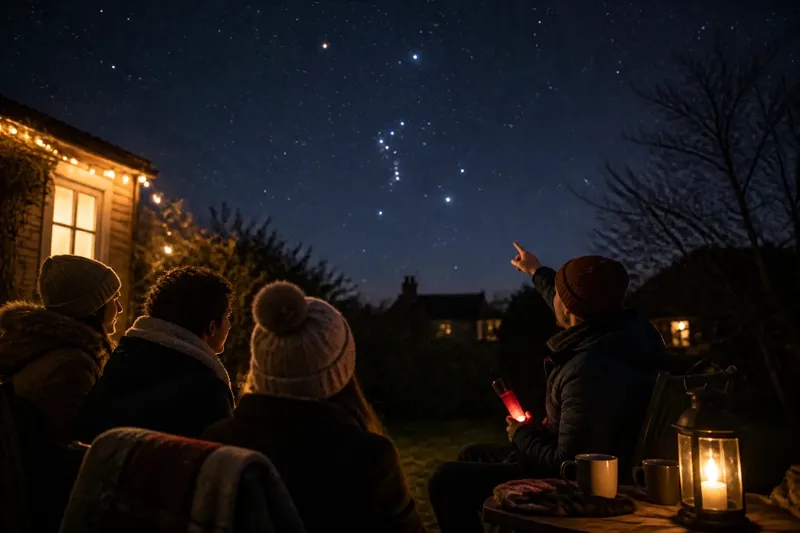
“I can’t see anything” is often the first thing someone says at a winter stargazing get-together. A good plan for shared stargazing does not depend on everyone recognising stars straight away: choose one constellation to follow, make room for eyes to adjust, and give each person an easy way to notice something.
That approach keeps the evening sociable without turning it into a lesson or a hunt for perfect conditions. The problems below are common, and each has a simple adjustment that lets the group keep looking together.
Choosing a manageable target
A plan can become crowded before anyone steps outside. Several constellations, a planet, a meteor shower and a tour of the Milky Way may sound appealing, but a group that is still learning the sky can lose its bearings when attention keeps shifting.
Choose one constellation that is visible from your observing spot at the planned time. Orion is a familiar winter option in many places in the Northern Hemisphere; its three belt stars make a clear feature to look for, though visibility depends on location, season and the horizon. In the Southern Hemisphere, choose a prominent pattern that is actually up that evening rather than relying on a Northern Hemisphere winter guide.
Check a current sky map or a planetarium app such as Stellarium before inviting people. Set the app to your location and time, then identify a single starting point: perhaps the belt of Orion, or another distinctive line of stars. This check is about selecting a target, not memorising a script.
Say what the group will try to find, but keep the invitation modest: “We’ll look for one star pattern and see what else we notice.” That gives newcomers a clear purpose without implying that everyone must spot every detail.
When nobody sees the pattern
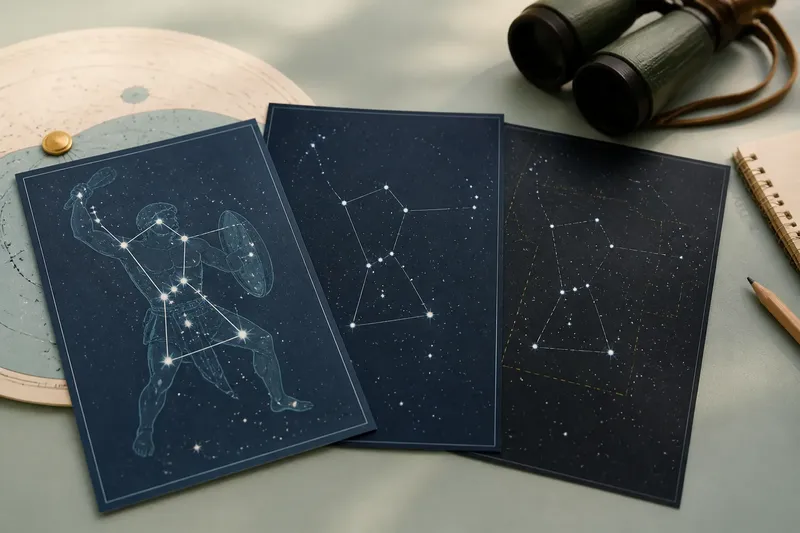
People may be looking at the right patch of sky but expecting the constellation to appear as a ready-made picture. The lines printed on a chart are aids added by people; the actual stars can look sparse, uneven or much less connected than the drawing suggests.
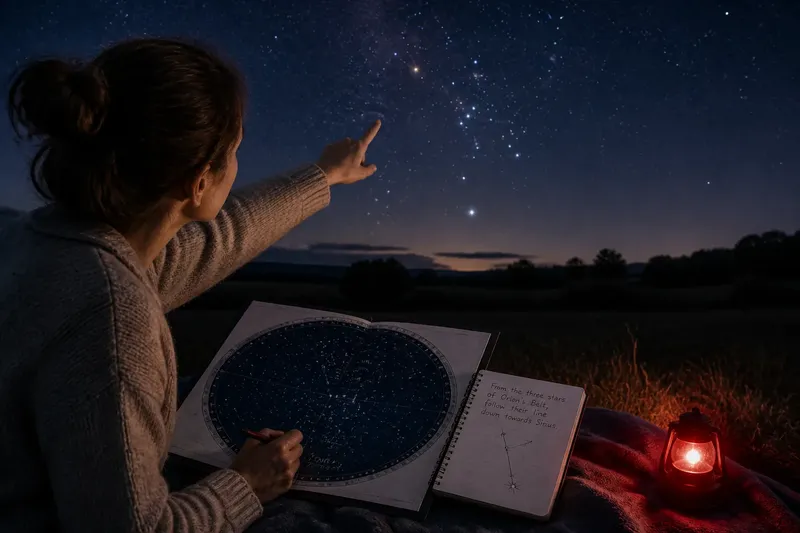
Start with a bright, distinctive feature rather than tracing the full outline. Ask everyone to find the same three stars, then pause before adding neighbouring stars. If someone uses a phone chart, explain that the screen may need to be held towards the sky and aligned with the view; a paper chart can be easier if it is shielded from stray light.
Give the group a noticing task that does not depend on naming stars. Ask each person to decide which star in the pattern looks brightest, which pair seems closest together, or whether the outline looks more like a straight line or a bent one. The answers can differ, and comparing them gives people a reason to keep looking.
Say you are hosting a small gathering in a garden and one guest cannot pick out Orion’s outline. You point to the belt, invite them to compare its three stars with the brighter star below it, and let them choose which appears more striking. The expected observable result is not instant recognition; it is that the guest has one clear feature to follow and a simple observation to share.
When stars seem to disappear
Eyes need time to become more sensitive to dim light after looking at bright surroundings. A porch lamp, phone screen or car headlights can interrupt that adjustment, so a faint star may be hard to see even when a brighter one is obvious.
Give people a few quiet minutes outside before asking them to look for subtle details. Keep indoor lights behind the group where possible, and invite everyone to dim or put away phone screens while they are observing. A red torch can help with reading a chart while disturbing night vision less than a bright white beam, but even red light is best used sparingly.
Do not make the wait feel like a test. Let conversation settle, offer a warm drink in a sheltered spot, and ask people to look back at the same patch of sky after a short pause. If the sky remains bright or hazy, shift the task to brighter stars instead of insisting that dim ones should be visible.
When cold breaks the conversation
Cold hands and feet make it difficult to stand still and look upwards. A group may become restless not because the sky is uninteresting, but because comfort has become the main concern.
Tell guests to wear warm layers, gloves and footwear suited to the ground, and choose a spot close to an indoor or sheltered place. Keep the viewing area clear of clutter, and provide chairs for anyone who would rather look upwards while seated. A warm pause indoors can be part of the evening rather than a sign that the plan has failed.
Alternate looking with short, simple tasks: compare two stars, sketch the pattern on a notepad, or describe where it sits relative to a roofline or tree. Avoid asking people to stare continuously at one patch of sky. A little movement and conversation can make the gathering more comfortable while keeping the constellation as its shared focus.
When clouds or lights interfere
Cloud can cover the chosen pattern, while street lighting can wash out fainter stars. Neither problem means the group has to force an observation that the conditions do not support.
Check the forecast and the view from the site before everyone arrives. If clouds are patchy, wait for a gap and use it to compare what becomes visible. If clouds are solid, turn the gathering into a conversation about the constellation’s shape or a short indoor chart activity, then offer another evening for observing. Avoid promising that a particular star will appear.
For light pollution, look for a safe spot with a darker view rather than walking into an unfamiliar area in the dark. A local park, garden or open space can work if access is permitted and the route is easy for the group. Where local access rules or the site’s instructions apply, check them once before settling on the location.
If the target is hidden by a nearby building or tree, change where the group stands only if the route is clear and suitable. Otherwise, choose a different visible feature within the same constellation, or simply notice the brightest stars available. The aim is shared attention, not a perfect view.
Making room for different observers
Some guests will know the names of stars; others may be looking up with no experience at all. A stream of facts can leave beginners feeling that they have missed the point, while silence can make them unsure what they are meant to do.
Offer one prompt at a time and leave space for answers. Useful prompts include “Which two stars would you connect first?” and “Does the pattern look different from where you are standing?” Invite people to pass, listen or look quietly. No one needs to perform expertise to take part.
Keep explanations tied to what the group can see. If someone asks why a star looks brighter, mention that apparent brightness depends on several things, including the star itself and its distance, without turning the gathering into a long lecture. If the answer is uncertain, say so and make a note to check later.
What if the plan changes?
What should we do if the constellation is below the horizon?
Choose another prominent pattern that is visible from your location at that time, using a current sky map to check. If you want to keep the original target, make the evening an indoor orientation session and arrange a new viewing date.
How long should we wait for eyes to adjust?
Allow a quiet pause outdoors and keep bright screens and lamps to a minimum; people adjust at different rates. You do not need to announce a countdown, and the group can look at brighter stars while waiting.
What can children notice without a telescope?
Ask them to find the brightest star in the chosen pattern, draw its outline, or compare the stars with a nearby roof or tree. These tasks use unaided vision and do not require anyone to know constellation names.
Should everyone bring binoculars?
No: a constellation is often easiest to follow with the unaided eye because binoculars show a smaller patch of sky. Binoculars can be an optional extra for looking at a particular bright object, but they are not needed for the group’s shared task.
Ending with a shared detail
Before people head indoors, ask each person to name one thing they noticed: a star that stood out, a shape they had not seen before, or the way the pattern sat above the local horizon. Keep the final round brief so it feels like a natural close, not a quiz.
For the next winter evening of shared stargazing, reuse the same constellation and invite the group to notice one new detail. Familiarity grows through returning to a patch of sky, and a simple shared observation can make that return feel easy rather than demanding.